Calls & Call Cards
Every call becomes a public record. Auto-generated, settled with the real outcome, cannot be edited.
No screenshots. No quietly deleted tweets. When a KOL calls a token, Zaps generates the card automatically and settles it with the real outcome, win or lose. The call card is the atomic social object of Zaps: the thing communities react to, defend, and challenge every day.
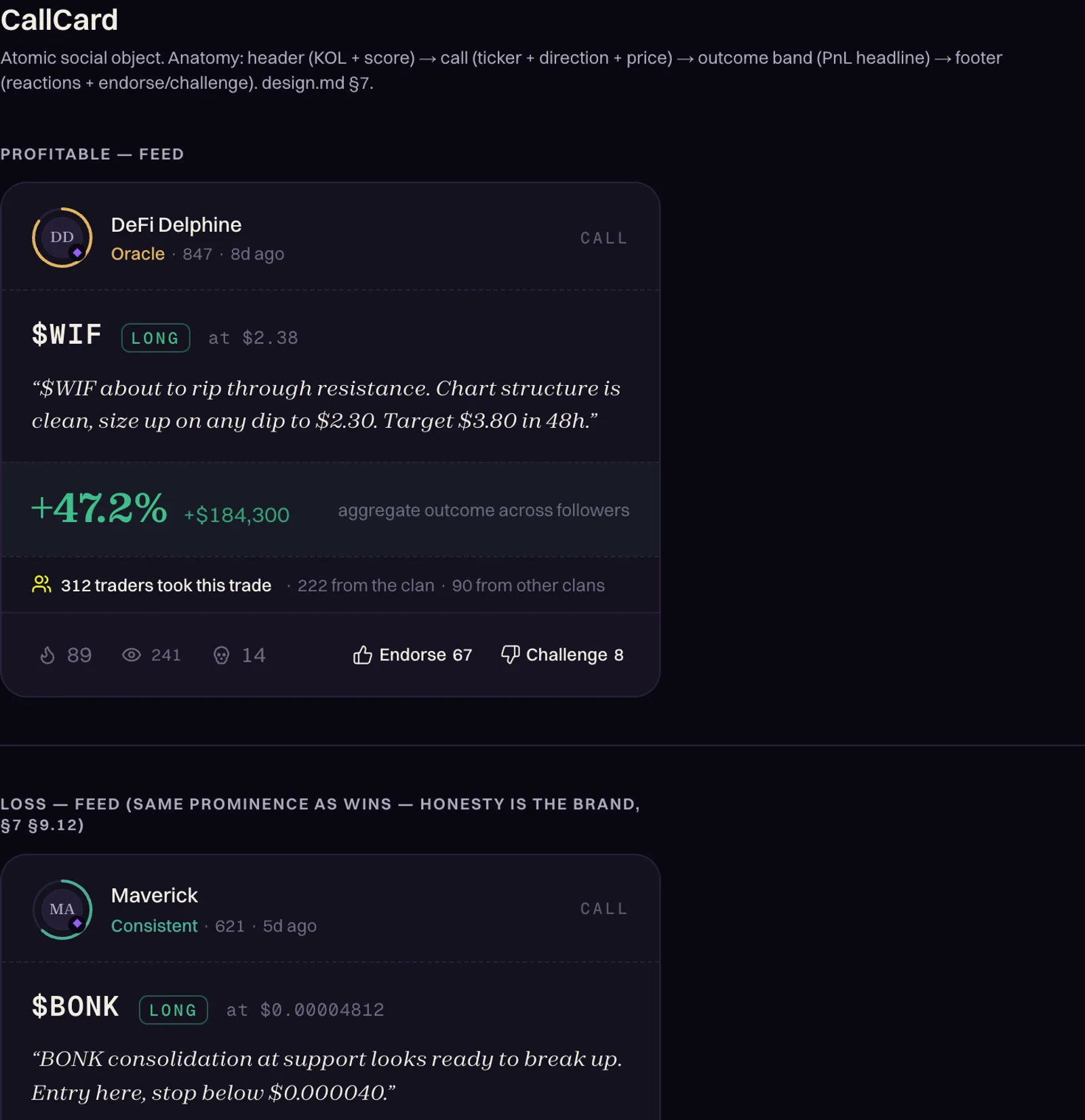
How a call becomes a record
- A KOL posts a call on X. Like they always have. No dashboard, no manual entry, no new behavior.
- Zaps detects it. Connected KOL accounts are monitored automatically. A post calling a specific token is detected, timestamped, and opened as a call record with an attribution window.
- Trades are attributed. Traders who take the same trade from their linked wallets, in this clan and any other, are attributed automatically within the window.
- The outcome is engraved. Did the traders who followed profit or lose? The aggregate outcome settles the card permanently and feeds the KOL's Call Attribution, the clan's rank, and each follower's own record.
Nobody curates their record
Every detected call is tracked whether the KOL wants it tracked or not. Losses appear next to wins. Cards cannot be edited or removed. A KOL cannot post ten calls and display the three that worked, and that single fact is what makes a Zaps track record worth more than any bio.
What a card shows
The token called and the price at detection. How many traders took the trade, from this clan and from others. The aggregate outcome. The KOL's updated score. And the live reaction bar where the community responds: endorsements, challenges, and experience reports from people who actually traded it.
Rollout
Automatic call detection ships within V1, after launch. Until it is live, KOL Score runs on community quality and conviction, exactly as described in KOL Score, and every leaderboard is labeled accordingly. The record starts building the day detection goes live, and it starts building for every connected KOL at once.